


What are the 5 top recruitment trends in 2026?
In 2026, recruitment agencies are competing on speed, insight, and trust. Recruiters face mounting pressure: more candidates, more data, tighter margins, and rising client expectations as regulators sharpen their focus on AI governance and data privacy.
As discussed at the Staffing Industry Analysts (SIA) Executive Forum Europe (SIA is the global advisor on staffing and workforce solutions) the traditional war for talent is rapidly becoming a war for AI agents, where advantage comes from how effectively agencies augment human expertise with intelligent automation.
So how are leading agencies staying ahead?
We'll explore five key recruitment trends shaping 2026 and how top agencies are preparing today.
1. How is AI becoming core infrastructure in recruitment in 2026?
In 2026, rather than relying on disconnected tools, leading agencies are embedding AI directly into CRM systems, CV matching, job creation, and analytics workflows. AI models have reached production-ready accuracy for high-stakes workflows.
Why this matters for your agency
When recruiters spend less time reformatting documents and more time having strategic conversations with clients and candidates, placement quality improves.
According to internal research across recruitment agencies, recruiters spend an average of 11.7 hours per week on manual administrative tasks. For a team of 10 recruiters, that's 117 hours weekly, which is nearly three full-time employees' worth of capacity locked away in repetitive work.
The agencies seeing the biggest gains are using AI to clear the path so they can actually do their job: building relationships and closing deals.
Just less admin to be honest. So not having to edit CVs, but being able to manage better accounts. For example, with Access Vincere Evo, I'd be able to find clients that we haven't worked with in the last 12 months, but we haven't had any contact with, or clients we've billed with before, but we haven't billed within the last 12 months. Kind of just check in, sending a checking email to find out how they're doing.
Raj Atwell, Recruiter, White Recruitment
2. Why is data privacy now a competitive advantage for recruiters?
As AI adoption accelerates, agencies are becoming more cautious about where candidate and client data flows. Many recruiters initially experimented with public AI tools like ChatGPT and Claude for quick tasks.
Data privacy regulations like the EU AI Act (regulation governing high-risk AI in employment decisions) are tightening compliance requirements for automated employment decision tools. High-risk applications, such as CV-scanning tools that rank job applicants, are now subject to specific legal requirements including:
- Transparency obligations (candidates must be informed AI is used)
- Human oversight requirements
- Accuracy and bias testing
- Documentation and audit trails
Trust increasingly influences vendor choice, enterprise client retention, and long-term growth. According to Capterra's 2025 HR Software Trends report, 67% consider security a critical feature when researching HR software to acquire and implement, while 43% report that security concerns triggered HR purchases last year.
Our data is secure within Access Vincere Evo. With public AI tools, there’s a risk that data could be exposed to open learning systems. We don’t want competitors learning about our business, what we do, or the clients we’re working with.
— Raj Atwell, Recruiter, White Recruitment
Switch to enterprise-grade AI solutions like Access Vincere Evo with data containment guarantees.
3. How are agencies using strategic AI for commercial impact, not just efficiency?
In 2026, rather than using AI purely for efficiency gains, top agencies are applying it as a commercial intelligence layer, uncovering patterns, gaps, and opportunities across marketing, candidates, and client demand.
What really excites me about what’s next is the commercial impact of AI. For us, being able to show real value from using AI has helped us win revenue clients we might not have spotted otherwise. Access helps by surfacing patterns and insights from data that’s already in our CRM, data we can technically access, but just can’t analyse properly at scale without AI.
— Rob Quirk, Marketing, Tempting Ventures Portfolio
4. How does AI matching accelerate skills-based hiring in 2026?
How is hiring changing?
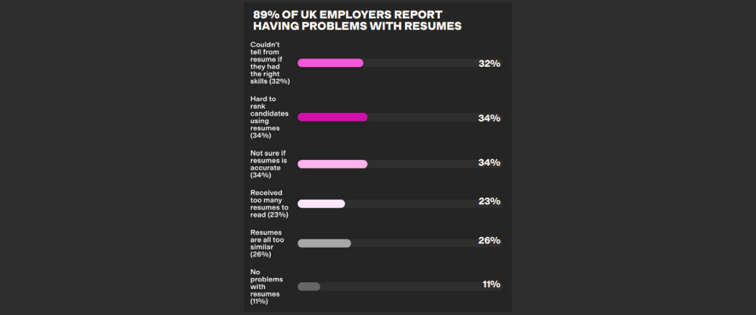
Labour shortages across sectors have forced employers to abandon credential requirements that artificially narrow talent pools. In 2026, agencies are shifting toward skills-based hiring, supported by AI that can interpret experience contextually.
What the latest data shows:
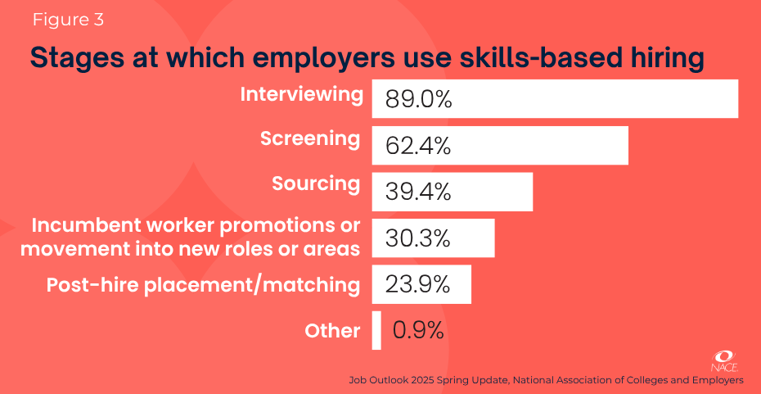
- 85 % of employers now use skills-based hiring practices — up from 81 % last year, according to the State of Skills-Based Hiring 2025 report. Employers also increasingly pair this with skills tests to validate candidate capabilities.
- Nearly 70 % of employers surveyed in early 2026 report using skills-based hiring practices, up from 65 % the year before, with 71 % applying these methods at least half of the time during screening and interviewing.
- In specific entry-level markets, almost two-thirds of employers leverage skills-based hiring to identify potential candidates, highlighting its growing role across the talent pipeline.
These figures make it clear that in 2026, skills-based approaches aren’t just a buzzword. They’re a dominant recruitment method across industries and seniority levels.
AI enables recruiters to surface non-obvious candidate matches by analysing transferable skills rather than keywords alone.
5. Why are recruitment agencies moving toward integrated ecosystems instead of point solutions?
AI delivers the most value when data flows seamlessly across systems. Agencies are moving away from fragmented toolsets toward integrated recruitment ecosystems.
Why integration matters in 2026
The roadmap with Access Vincere Evo is really interesting in that they've talked to their customers quite closely and understand the key data points within the CRM that they need to wrap their AI around. Understanding that Access Evo has prioritised from customer feedback what those key data points are and how to bring that into their ecosystem and unlock that value is really quite interesting and exciting. And hopefully we'll have that commercial impact to the business.
— Rob Quirk, Marketing, Tempting Ventures Portfolio
How agencies are responding:
- Consolidating platforms where possible
- Prioritising integrations over experimentation
- Choosing vendors that evolve alongside their business
Access Vincere Evo is designed as an AI-enabled recruitment ecosystem, aligning CRM, automation, analytics, and intelligence in one environment.
For us, it’s all about how we integrate Access into the other tools we use, and making sure everything is working together.
— Mark Morby, Director of Operations, Danos Group
Why leading agencies choose Access Vincere Evo in 2026
Access Vincere Evo was built specifically to address this reality. Trusted by over 22,000 recruiters worldwide, our platform integrates AI, automation, and data-driven insights to transform the way you recruit.
Join recruitment agencies already using Access Vincere Evo to gain competitive advantage in 2026.
